Low Backlash Planetary Reducer for Precision Motion Applications
A low backlash planetary reducer is used when motion accuracy, repeatability and servo response matter more than simple speed reduction. It helps reduce angular clearance and supports stable positioning in automation equipment, CNC machinery and precision motion systems.
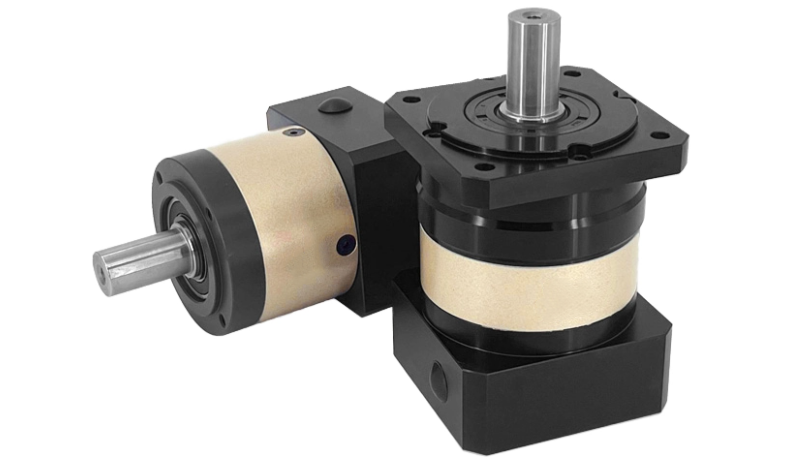
Low backlash reducers help control angular clearance in servo positioning and repeatable motion applications.
In many industrial machines, a gearbox is not only used to reduce speed and increase torque. It also affects how accurately the machine stops, reverses and repeats the same motion. When the equipment uses servo motors, stepper motors, ball screws, rotary tables, robotic axes or inspection stations, backlash becomes an important factor in the final motion result.
A low backlash planetary reducer is designed to reduce the angular clearance between internal gear components. This helps the output shaft respond more closely to the motor command, especially during reversing motion, short-stroke positioning and frequent start-stop operation. For machine builders, choosing the right low backlash reducer can improve control stability and reduce positioning uncertainty.
A low backlash planetary reducer is suitable when the machine requires accurate positioning, stable repeatability, smooth servo response and controlled motion during frequent direction changes. It is commonly used in CNC machinery, automation equipment, robotic axes, inspection systems, packaging positioning units and precision linear motion systems.
1. What Does Backlash Mean in a Gear Reducer?
Backlash is the small clearance between gear teeth or transmission components. In a reducer, this clearance may appear as a small angular movement at the output shaft when the motor changes direction. The motor may start moving, but the output side may respond after a slight delay.
In simple continuous rotation applications, a small amount of backlash may not cause serious problems. But in positioning equipment, even a small angular gap can create visible error at the tool, fixture, sensor, platform or workpiece.
A low backlash planetary reducer reduces this angular clearance, helping the machine follow the motor command more closely. This is especially important for servo systems that require stable position control.
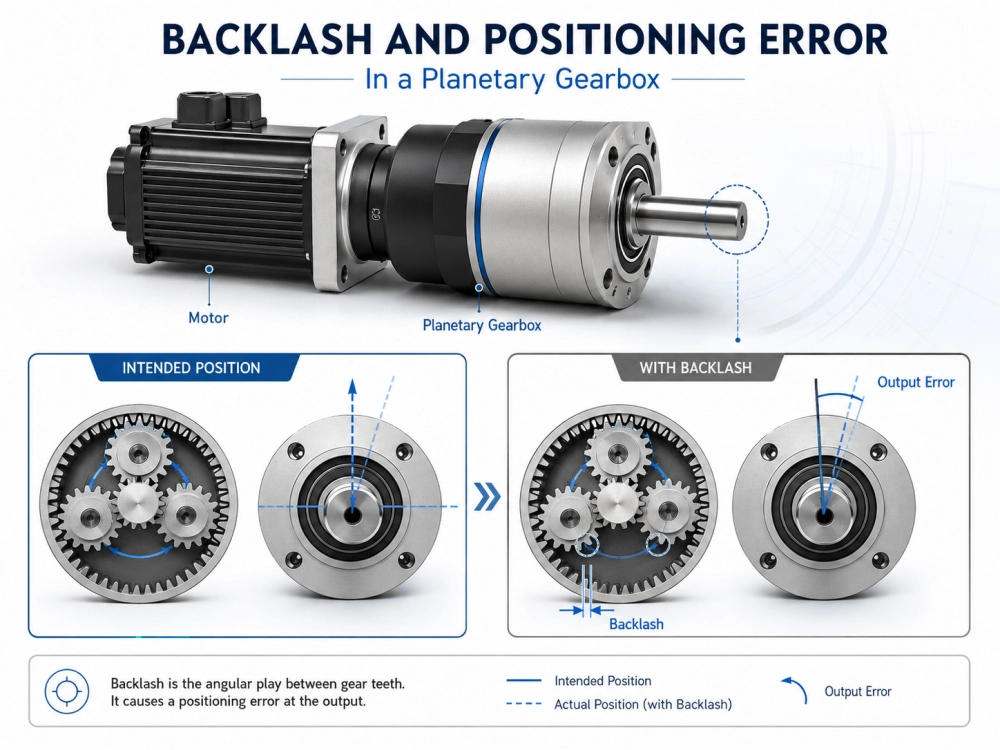
Backlash becomes important when:
The machine frequently reverses direction.
The axis performs short and repeated movements.
The output position must stop accurately.
The system uses servo or stepper positioning.
The workpiece, tool or sensor requires repeatable alignment.
The machine has high acceleration and deceleration cycles.
2. Why Low Backlash Matters for Precision Motion
Precision motion is not only about the motor or controller. Mechanical transmission also affects the final position. If the gearbox has too much clearance, the control system may command the motor correctly, but the output side may still show small position deviation.
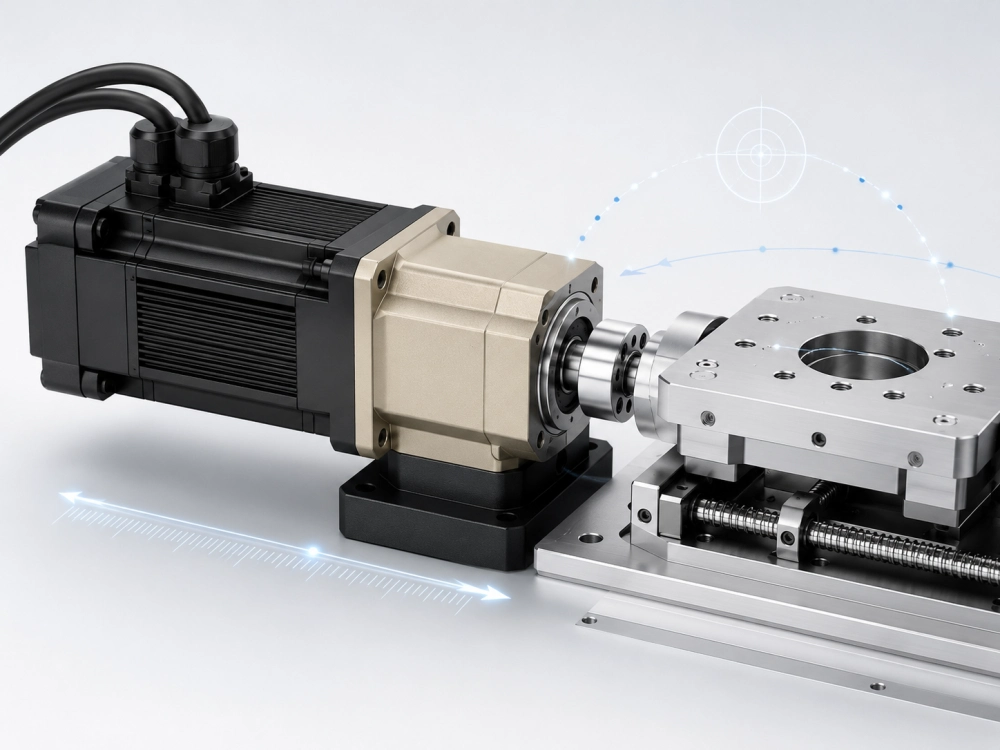
In servo motor systems, backlash can affect response during acceleration, deceleration and direction reversal. When the machine changes direction, the clearance must be taken up before the load starts moving in the opposite direction. This may cause lost motion, vibration, unstable response or repeated positioning error.
A low backlash planetary reducer helps reduce this gap and makes the output movement more predictable. This is why it is often selected for precision automation equipment rather than simple conveyor drives.
3. Where Low Backlash Planetary Reducers Are Commonly Used
CNC Machinery
Used in feeding axes, tool positioning, rotary fixtures and auxiliary motion systems where repeatability and stable transmission are required.
Automation Equipment
Suitable for pick-and-place systems, assembly stations, inspection platforms, linear modules and machine positioning units.
Robotic Motion
Applied in robotic axes, end-effector positioning, small rotary joints and servo-driven mechanisms that need controlled movement.
Application Point
If the machine only needs continuous rotation, standard backlash may be acceptable. If the machine needs accurate stopping, reverse movement or repeat positioning, low backlash becomes much more valuable.
4. Low Backlash and Servo Motor Response
Servo motors are widely used because they can provide fast response and accurate control. However, the servo system still depends on mechanical transmission. If the reducer has excessive backlash, the servo motor may react quickly, but the load response may not be as accurate as expected.
Low backlash helps the output shaft follow the motor command more directly. This can improve the feeling of rigidity in the motion axis and reduce unstable movement during direction changes. For machines that need short cycle times, this can also make the system easier to tune.
When a servo system shows overshoot, vibration or unstable stop position, the problem is not always the controller. Mechanical backlash, load inertia and transmission rigidity should also be reviewed.
Standard Reducer
Suitable for general speed reduction.
Acceptable for continuous motion.
Lower precision requirement.
Often used in simple transmission systems.
Low Backlash Reducer
Suitable for accurate positioning.
Better for frequent reversing motion.
Improves repeatability and motion response.
Often used in servo-controlled precision equipment.
5. How to Choose the Right Backlash Level
The lowest backlash is not always necessary for every machine. A very low backlash reducer may increase cost, and the system may not benefit from it if the application does not require high positioning accuracy. The correct choice should be based on the real motion requirement.
For example, a conveyor drive may not require very low backlash because it mainly runs in one direction. A rotary positioning table, inspection mechanism or CNC feeding axis may require lower backlash because the output position directly affects machine accuracy.
Before selecting the reducer, confirm whether the machine needs continuous rotation, intermittent positioning, bidirectional movement, high repeatability or short-stroke motion. These conditions will help determine the suitable backlash grade.
6. Other Parameters Still Matter
Backlash is important, but it should not be the only selection factor. A low backlash planetary reducer also needs to match the required torque, speed, ratio, bearing load, motor flange and output shaft connection.
If the reducer has low backlash but insufficient torque capacity, it may still fail in heavy-load operation. If the ratio is not suitable, the output speed and torque may not match the machine requirement. If the mounting interface is wrong, the reducer cannot be installed properly.
For complete selection, backlash should be checked together with torque, ratio, motor model, load type and installation space.
Selection information to provide
Servo or stepper motor model
Required reduction ratio
Rated and peak torque demand
Backlash or accuracy requirement
Load type and motion cycle
Output shaft or flange requirement
Installation drawing if available
7. Inline, Right Angle and Low Backlash Options
Low backlash is a precision requirement, while inline and right angle are layout choices. These concepts should not be confused. An inline planetary gearbox is selected when the motor and output shaft stay on the same centerline. A right angle planetary gearbox is selected when the machine needs a 90-degree transmission path or shorter installation length.
In practical projects, both inline and right angle gearboxes may have low backlash options depending on the series and precision grade. Therefore, the correct selection should consider both layout and accuracy.
Need Same-Axis Layout?
Choose an inline planetary gearbox when the motor and output shaft can be arranged in one straight line.
Need Compact Layout?
Choose a right angle planetary gearbox when the motor must be mounted from the side or space is limited.
Need Better Accuracy?
Choose a low backlash planetary reducer when repeatability and positioning stability are important.
8. Common Mistakes When Selecting a Low Backlash Reducer
One common mistake is choosing low backlash only because it sounds better. If the equipment does not require accurate positioning, a standard reducer may already be enough. Selection should be based on the application requirement, not only on the product name.
Another mistake is ignoring torque and load condition. A reducer with low backlash but insufficient torque capacity may overheat, wear quickly or fail under repeated acceleration. The reducer should have enough strength for both continuous load and peak load.
A third mistake is not checking the full transmission system. Couplings, belts, ball screws, bearings and machine frame rigidity can also affect positioning accuracy. The reducer is important, but it is only one part of the complete motion system.
Related Technical Resources
If you are comparing reducer options for servo motor positioning, automation equipment, or precision motion systems, the following product resources may help with model selection and structure comparison.
- PlanetDrivePro planetary gearbox series — overview of inline and right angle planetary gearbox options for automation applications.
- Inline planetary gearbox — suitable for compact coaxial servo motor transmission layouts.
- Contact Zhuochuang for gearbox selection support — useful when torque, ratio, backlash, flange size, and motor matching need to be checked together.
FAQ: Low Backlash Planetary Reducer
What is a low backlash planetary reducer?
A low backlash planetary reducer is a precision gear reducer designed to reduce angular clearance and improve motion response, repeatability and positioning stability.
Why is backlash important in servo motor systems?
Backlash can create lost motion when the servo motor changes direction. Lower backlash helps the output shaft respond more closely to the motor command.
Does every machine need a low backlash reducer?
No. Continuous rotation applications may not need very low backlash. Low backlash is more important for positioning, reversing motion and repeatability.
What information should I provide for selection?
Send the motor model, ratio, torque demand, load condition, backlash requirement, output shaft type and installation drawing if available.
Need a Low Backlash Planetary Reducer for Your Equipment?
Send your motor model, required ratio, torque, load condition and backlash requirement. We will help check a suitable planetary reducer configuration for your precision motion application.
precision transmission products, including hollow rotary tables and planetary gearboxes for automation, robotics, CNC machinery, packaging systems, and industrial motion control applications.