Planetary Gearbox Torque: Rated Torque vs Peak Torque for Servo Drives
Planetary gearbox torque selection is not only about choosing a number from a catalog. Rated torque, peak torque, acceleration load and duty cycle all affect whether a gearbox can work reliably in servo-driven machinery.
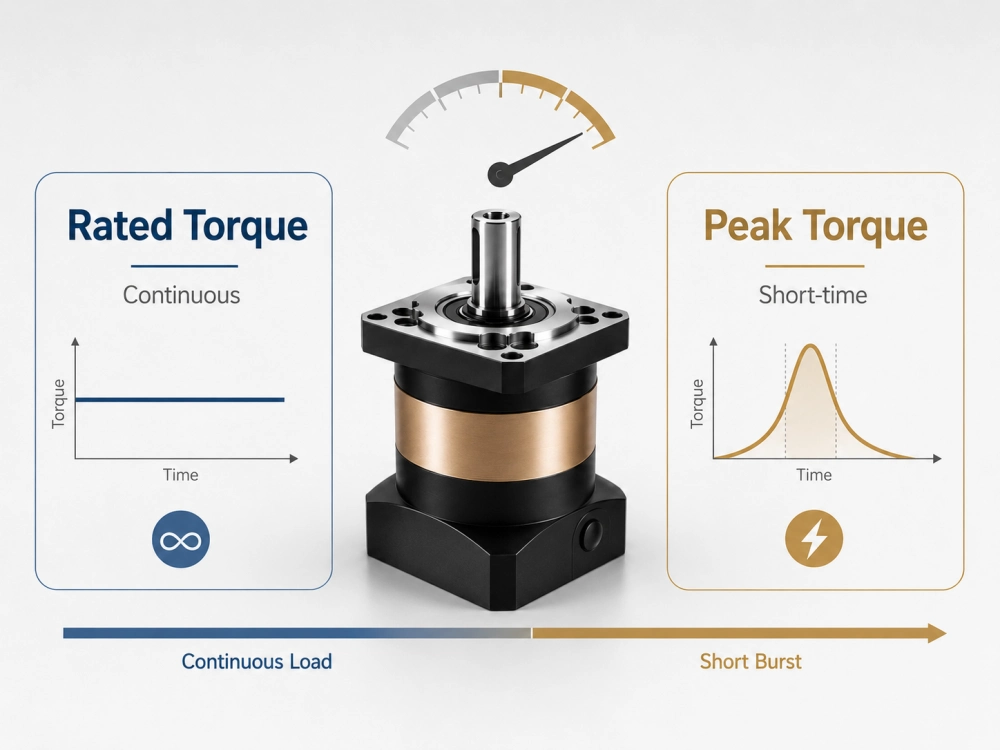
Rated torque and peak torque should be checked separately in servo motor gearbox selection.
In many automation systems, a planetary gearbox is selected to reduce motor speed and increase output torque. But for servo drives, the torque demand is often dynamic. The machine may accelerate quickly, stop suddenly, reverse direction frequently or hold a load for a long time. These conditions can create a torque load that is much higher than the average running torque.
This is why engineers should not select a planetary gearbox only by motor power or nominal ratio. A suitable gearbox must handle both continuous torque and short-time peak torque. It also needs enough safety margin for the real duty cycle of the machine.
Rated torque is the torque a planetary gearbox can support during continuous operation. Peak torque is the short-time torque the gearbox can handle during acceleration, emergency stop, impact load or rapid reversing. For servo motor applications, both values should be checked before selection.
What Is Rated Torque?
Rated torque refers to the continuous output torque that a gearbox can carry under normal operating conditions. It is related to gear strength, bearing capacity, lubrication, heat generation and service life. If the machine runs for long periods, rated torque becomes a key selection value.
For example, a conveyor, feeding unit or rotating mechanism may work continuously for many hours. In this case, the gearbox should not operate close to its maximum limit all the time. A reasonable torque reserve helps reduce heat, wear and unexpected failure.
What Is Peak Torque?
Peak torque is the short-time torque that appears during acceleration, deceleration, start-stop movement, load impact or direction reversal. Servo motors can generate high torque for a short period, so the gearbox must be able to withstand this peak load.
If peak torque is ignored, the gearbox may look suitable during normal running but fail during sudden acceleration or emergency stop. This is especially important for indexing mechanisms, robotic motion, packaging equipment and precision positioning systems.
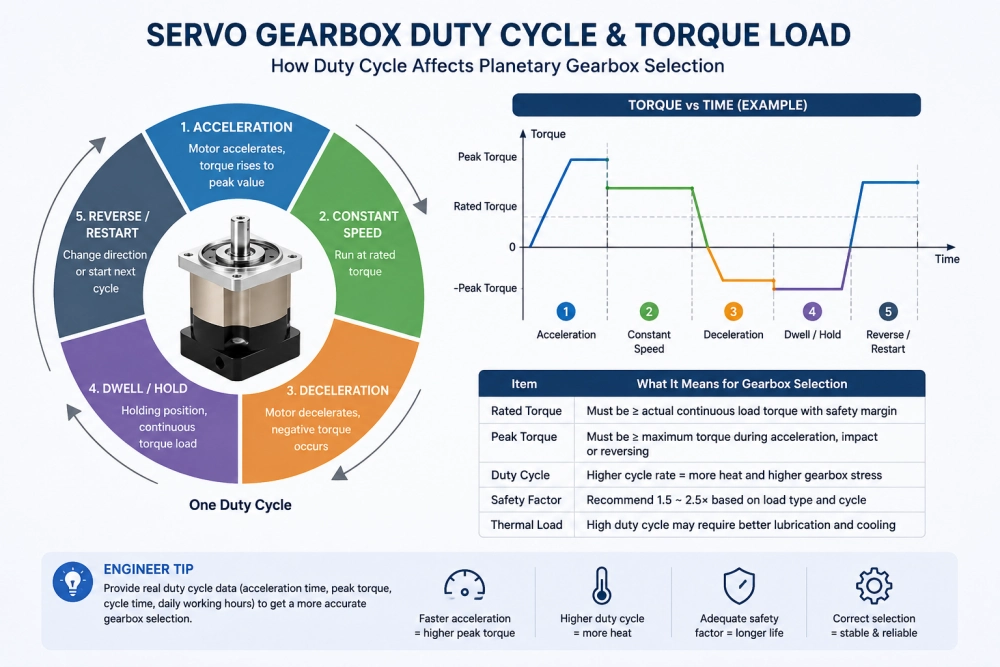
Why Duty Cycle Matters
Duty cycle describes how often the machine accelerates, runs, stops, reverses or holds position. Two machines may use the same servo motor power, but their gearbox torque requirements can be very different if their duty cycles are different.
A machine with smooth continuous rotation may need moderate torque reserve. A machine with fast indexing, short cycle time and frequent reversing may need a stronger gearbox even if the rated motor power is the same.
For this reason, it is helpful to provide motion cycle information when requesting a gearbox recommendation.
Rated Torque vs Peak Torque: Simple Comparison
Rated Torque
Used for continuous running load. It affects heat, durability and long-term service life.
Peak Torque
Used for short-time overload conditions such as acceleration, reversing and impact load.
Common Selection Mistakes
One common mistake is choosing a gearbox only by servo motor wattage. Motor power can give a rough starting point, but it does not describe the real load condition. A 750W servo motor may drive a light conveyor, a heavy rotary table or a fast positioning axis. These applications need different torque checks.
Another mistake is only checking rated torque and ignoring peak torque. This may cause problems in machines with fast acceleration or frequent start-stop cycles. The gearbox may work during slow testing but fail after the machine runs at full production speed.
A third mistake is not considering installation layout and backlash at the same time. Torque capacity is important, but the gearbox also needs to match the shaft direction, mounting space and precision requirement. For broader product comparison, you may review this planetary gearbox manufacturer.
Information to Send for Torque Selection
Servo or stepper motor model
Required reduction ratio or output speed
Rated load torque and peak load torque
Acceleration and deceleration time
Start-stop frequency or duty cycle
Mounting direction and output shaft requirement
Backlash or positioning accuracy requirement
Conclusion
Planetary gearbox torque selection should consider both rated torque and peak torque. Rated torque protects continuous operation, while peak torque protects the gearbox during acceleration, reversing and short-time overload. For servo motor applications, the safest method is to check torque together with ratio, speed, duty cycle, backlash and mounting layout.
Need Help Checking Planetary Gearbox Torque?
Send your motor model, required ratio, load torque, peak torque and duty cycle. We will help check a suitable gearbox configuration for your equipment.
Contact Us